
AI market analysis, explained clearly
Understand how AI can organise market information, identify relationships and support research — together with the limitations that make human review essential.
What AI-assisted market analysis can do
AI systems can process large volumes of structured and unstructured information more quickly than a person reviewing every item manually. They may help organise data, compare variables, summarise themes and highlight patterns for further investigation.
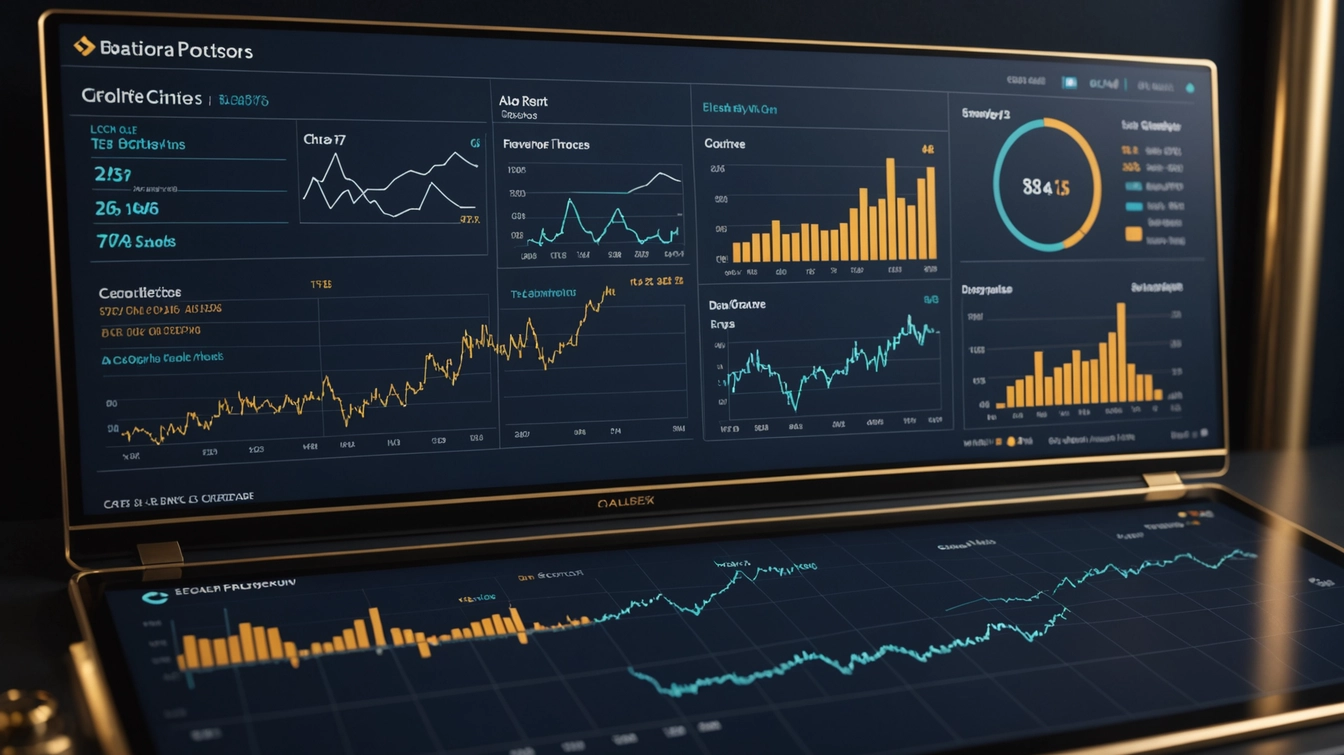
How systems may analyse market information
Pattern recognition
Models can compare historical behaviour and identify recurring structures, although future market conditions may differ substantially.
Natural-language processing
Text analysis may classify themes or sentiment in reports and news, but tone, sarcasm and context can be misunderstood.
Anomaly detection
Systems can flag unusual movements or values for review without proving why the anomaly occurred or what will happen next.
Scenario comparison
Models can explore how assumptions change potential outcomes, but a scenario is not a forecast and depends on its inputs.
Information summarisation
AI can condense large documents quickly, yet important caveats may be omitted or simplified too aggressively.
Risk monitoring
Rules and models may highlight threshold breaches, while sudden events and hidden correlations can still create unexpected loss.
Four questions for every AI output
What data?
Is it current, relevant, complete and obtained from credible sources?
What assumption?
Which relationships or market conditions does the conclusion depend on?
What is missing?
Could new events, liquidity or human behaviour make the result unreliable?
What is the risk?
What happens if the conclusion is wrong and can the potential loss be tolerated?
A balanced comparison
| Potential strength | Important limitation |
|---|---|
| Processes information at scale | Poor or incomplete data produces weak conclusions |
| Applies rules consistently | Consistency does not mean the rules are correct |
| Highlights patterns quickly | Historical patterns can break without warning |
| Supports scenario analysis | Models cannot capture every real-world event |
AI does not remove market risk
Outputs can be wrong, outdated or overconfident. Treat AI-assisted information as one research input and seek independent professional advice where appropriate.
Use AI-assisted context with critical judgement
Explore the Garlenix AI platform and learn how market information is presented before deciding whether to continue.